You’ve experienced it countless times: you order your favorite dish at a restaurant, love it, try to recreate it at home using what seems like the same ingredients and it just doesn’t taste quite right. The flavors are muted. The textures are off. Something is missing.
Here’s the truth: restaurant food doesn’t taste better because chefs have access to magical ingredients you can’t buy. It tastes better because they use specific techniques, understand flavor-building principles, and aren’t afraid of the ingredients that make food delicious. The good news? You can apply these same principles at home.
Let’s decode exactly what restaurants do differently and how you can bridge that gap in your own kitchen.
They Don’t Skimp on Fat
The single biggest difference between restaurant cooking and home cooking is the liberal use of fat. Butter, olive oil, cream, bacon fat restaurants use far more than most home cooks would dare.
What restaurants do: A typical restaurant pasta dish might use 2-3 tablespoons of butter or olive oil per serving to create that silky, coating sauce. Vegetables get tossed in oil before roasting. Steaks get basted in butter as they finish cooking.
Why it works: Fat is a flavor carrier. It coats your palate and makes every bite satisfying. It also conducts heat efficiently, creating better browning and caramelization.
How to replicate at home: Don’t be afraid of fat, but use it strategically. Finish sauces with a tablespoon of cold butter whisked in at the end. Drizzle quality olive oil over finished dishes. When roasting vegetables, use enough oil that they glisten—not swim, but definitely glisten.
Salt Is Used Properly (and Generously)
Professional kitchens salt at every stage of cooking, not just at the end. This is perhaps the most transformative difference you can implement immediately.
What restaurants do: Salt the pasta water until it tastes like the sea. Season meat 30-60 minutes before cooking. Add salt to vegetables as they cook, not just before serving. Taste and adjust seasoning multiple times during cooking.
Why it works: Salting at different stages allows the seasoning to penetrate ingredients rather than just sit on the surface. Early salting also draws out moisture (which aids browning) and allows proteins to retain more juice during cooking.
How to replicate at home: Buy kosher salt (easier to control than table salt) and keep it in an open container near your stove. Season proteins well in advance—even overnight in the refrigerator. Salt your cooking water. Taste your food as it cooks and adjust. You should be adding salt at least 2-3 times during the cooking process for most dishes.
High Heat and Proper Preheating
Home cooks tend to use medium heat for everything. Restaurants crank the heat up and preheat equipment properly.
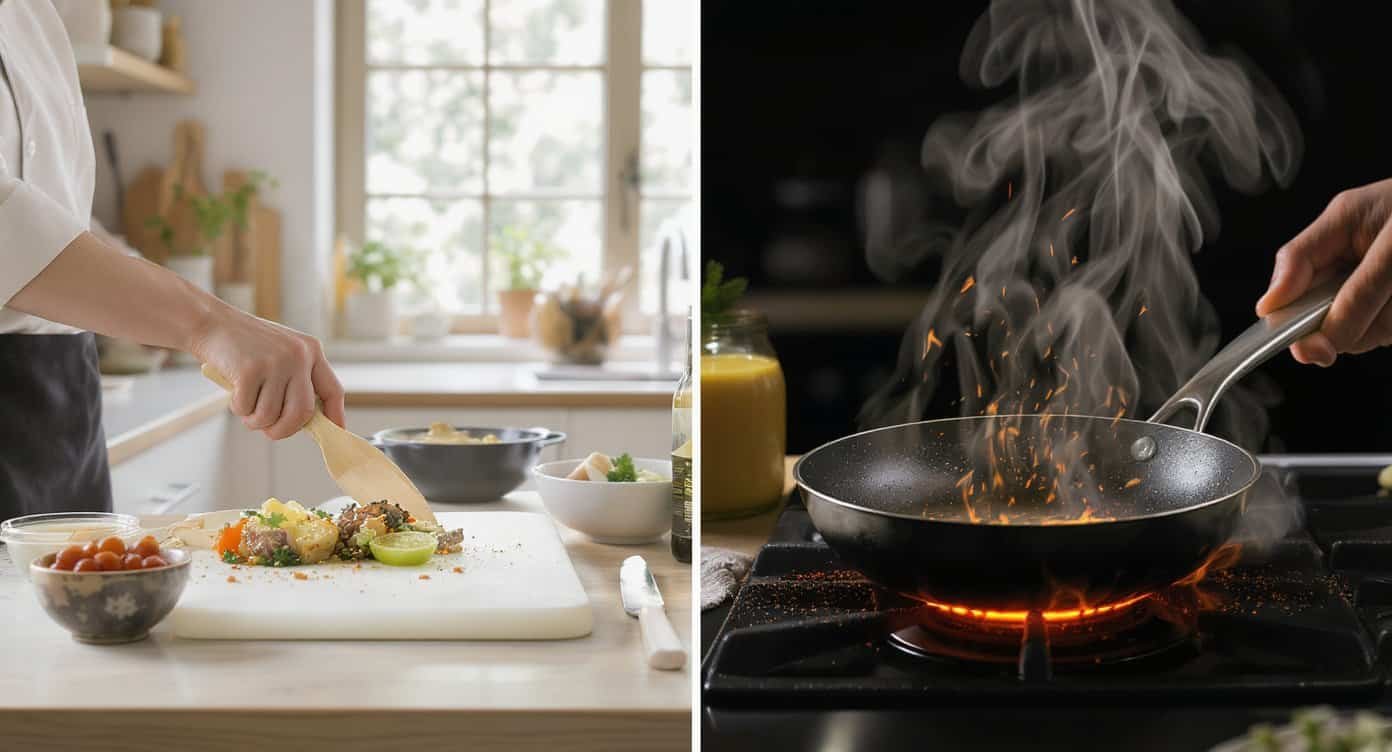
What restaurants do: Preheat pans until they’re properly hot, you should see wisps of smoke. Preheat ovens for at least 20 minutes. Use maximum heat for searing and developing crust.
Why it works: High heat creates the Maillard reaction, the complex browning that generates hundreds of flavor compounds. It also evaporates surface moisture quickly, preventing steaming and ensuring crispy exteriors.
How to replicate at home: Let your pan preheat for 3-5 minutes before adding food. Test heat by flicking a drop of water in the pan, it should immediately ball up and skitter across the surface. Don’t be afraid to use high heat for searing (just have your ventilation on). Preheat your oven fully, those extra 10 minutes matter.
Fresh Herbs Are Used Liberally
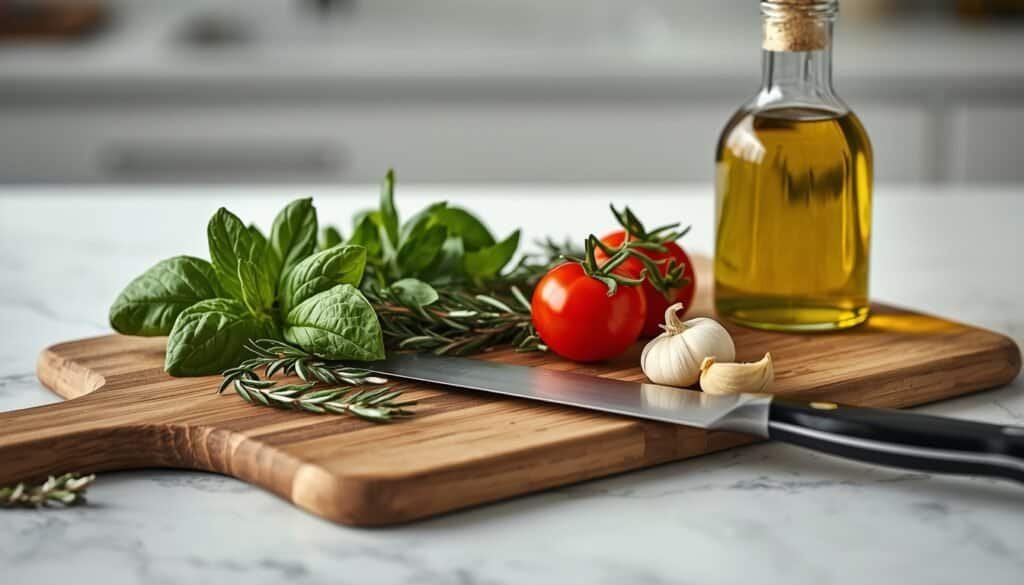
While home cooks might add a teaspoon of parsley for garnish, restaurants use fresh herbs by the handful.
What restaurants do: Chop fresh herbs and add them not just as garnish but as a core ingredient. A pasta might get a whole cup of fresh basil. Soups get finished with handfuls of cilantro or parsley.
Why it works: Fresh herbs provide bright, vibrant flavor that dried herbs can’t match. They add complexity and freshness that makes food taste “clean” and well-balanced.
How to replicate at home: Buy fresh herbs for dishes where they’re featured. Use the whole bunch, not just a tablespoon. Add tender herbs (basil, cilantro, parsley) at the end of cooking. Treat them as an ingredient, not just a garnish.
Acid Brightens Everything
Restaurants finish nearly every dish with acid-lemon juice, vinegar, wine, to brighten flavors before service.
What restaurants do: A squeeze of lemon goes on fish. Red wine vinegar finishes a pasta sauce. Lime juice perks up a soup. This happens right before the dish goes out.
Why it works: Acid wakes up your taste buds and makes other flavors pop. It cuts through richness and adds dimension. It’s the difference between food that tastes flat and food that tastes vibrant.
How to replicate at home: Keep fresh lemons and a good vinegar (red wine, sherry, or white wine vinegar) near your stove. Before serving, taste your dish and add a squeeze of lemon or splash of vinegar. Start small, you can always add more. The dish should taste brighter and more balanced, not sour.
Layering Flavors Throughout Cooking
Home cooks often add all ingredients at once. Restaurants build flavor in stages.
What restaurants do: Start with aromatics (onions, garlic, ginger) in fat. Add spices to bloom in the oil. Deglaze pans with wine or stock to capture browned bits. Reduce liquids to concentrate flavors. Finish with fresh ingredients for brightness.
Why it works: Each cooking stage develops different flavors. Garlic added at the beginning tastes mellow and sweet. Garlic added at the end tastes sharp and pungent. By adding ingredients at different times, you create complexity.
How to replicate at home: Follow recipes that specify when to add ingredients. Start with your aromatics. Let ingredients actually cook and develop before adding the next component. Scrape up any browned bits stuck to the pan, that’s concentrated flavor.
Mise en Place (Everything in Its Place)
Professional kitchens prepare all ingredients before cooking begins. Home cooks often chop as they go.
What restaurants do: Before any heat is turned on, everything is chopped, measured, and ready to go. This is non-negotiable in professional kitchens.
Why it works: Cooking happens fast. If you’re chopping garlic while onions burn, your dish suffers. Mise en place lets you focus on technique and timing rather than scrambling.
How to replicate at home: Read the entire recipe before starting. Chop all vegetables, measure all ingredients, and set them out before you turn on the stove. Yes, this creates more prep dishes, but it dramatically improves your cooking results.

Sauces Are Made from Scratch
Restaurants rarely use bottled sauces. They build sauces from pan drippings, stocks, and wine reductions.
What restaurants do: After searing protein, deglaze the pan with wine or stock, scraping up browned bits. Reduce by half. Add butter or cream. Adjust seasoning. This takes 3-4 minutes and creates incredible flavor.
Why it works: The browned bits stuck to the pan (fond) are packed with concentrated flavor. Wine or stock dissolves them and becomes the base for a sauce that tastes like the protein it’s accompanying.
How to replicate at home: Don’t wash that pan after cooking protein. Add 1/2 cup wine or stock and scrape with a wooden spoon. Let it bubble and reduce by half. Whisk in a tablespoon of cold butter. Season with salt and pepper. Pour over your protein. You just made a restaurant-quality pan sauce.
Resting Proteins Is Non-Negotiable
Home cooks often slice into meat immediately after cooking. Restaurants always let protein rest.
What restaurants do: Steaks rest 5-10 minutes after cooking. Roasted chicken rests 15-20 minutes. Larger roasts rest even longer.
Why it works: As meat cooks, juices are pushed toward the center. Resting allows juices to redistribute throughout the meat. Cut too early and those juices run onto your cutting board instead of staying in the meat.
How to replicate at home: Pull proteins off heat 5 degrees before your target temperature (they’ll continue cooking as they rest). Tent loosely with foil. Wait. Yes, the food will still be hot. Yes, it’s worth it.
Temperature Control Is Precise
Restaurants use thermometers. Home cooks guess.
What restaurants do: Proteins are tested with instant read thermometers. Oil temperature is monitored. Nothing is cooked “until it looks done.”
Why it works: Perfect doneness is a narrow temperature range. Guessing leads to overcooked or undercooked food. Thermometers remove the guesswork.
How to replicate at home: Buy an instant-read thermometer (they cost $15-30). Use it. Every time. Chicken is done at 165°F. Medium-rare steak is 130-135°F. Oil for frying should be 350-375°F. Stop guessing.
Quality Ingredients in Key Places
Restaurants don’t use premium ingredients for everything, but they splurge where it matters.
What restaurants do: Buy great olive oil for finishing (not cooking). Use real Parmigiano-Reggiano, not pre-grated cheese. Stock real butter, not margarine. But they’re fine with canned tomatoes and frozen vegetables where appropriate.
Why it works: Some ingredients carry a dish and are worth the premium. Others are background players where quality doesn’t matter as much.
How to replicate at home: Identify the 2-3 star ingredients in each dish. Buy good versions of those. For everything else, mid-range is fine. Keep finishing olive oil, good butter, and real Parmesan on hand. These three ingredients alone will elevate dozens of dishes.
They Taste and Adjust Constantly
Perhaps the most important habit: restaurants taste food multiple times during cooking and adjust seasoning.
What restaurants do: Taste the sauce. Add salt. Taste again. Add acid. Taste again. Perfect. This happens constantly throughout service.
Why it works: Recipes are guidelines, not gospel. Your ingredients (especially salt) vary. Your taste preferences vary. The only way to know if food is properly seasoned is to taste it.
How to replicate at home: Keep a drawer of tasting spoons near your stove. Taste your food throughout cooking. Ask yourself: does it need salt? Acid? Fat? Sweetness? Adjust. Taste again. Don’t serve food you haven’t tasted.
Putting It All Together
You don’t need to implement all of these changes at once. Start with the fundamentals:
- Use more salt (properly)
- Don’t fear fat
- Finish with acid
- Use high heat for searing
- Invest in an instant-read thermometer
Master these five principles and your home cooking will improve dramatically. The rest are refinements that you can add over time.
Remember: restaurants aren’t keeping secrets from you. They’re using techniques developed over centuries of cooking techniques that work just as well in a home kitchen as in a professional one. The only difference is consistency and fearlessness.
Stop being timid with salt. Stop using medium heat for everything. Stop skipping the butter. Stop cutting into meat immediately.
Start cooking like a professional. Your weeknight dinners will never be the same.