
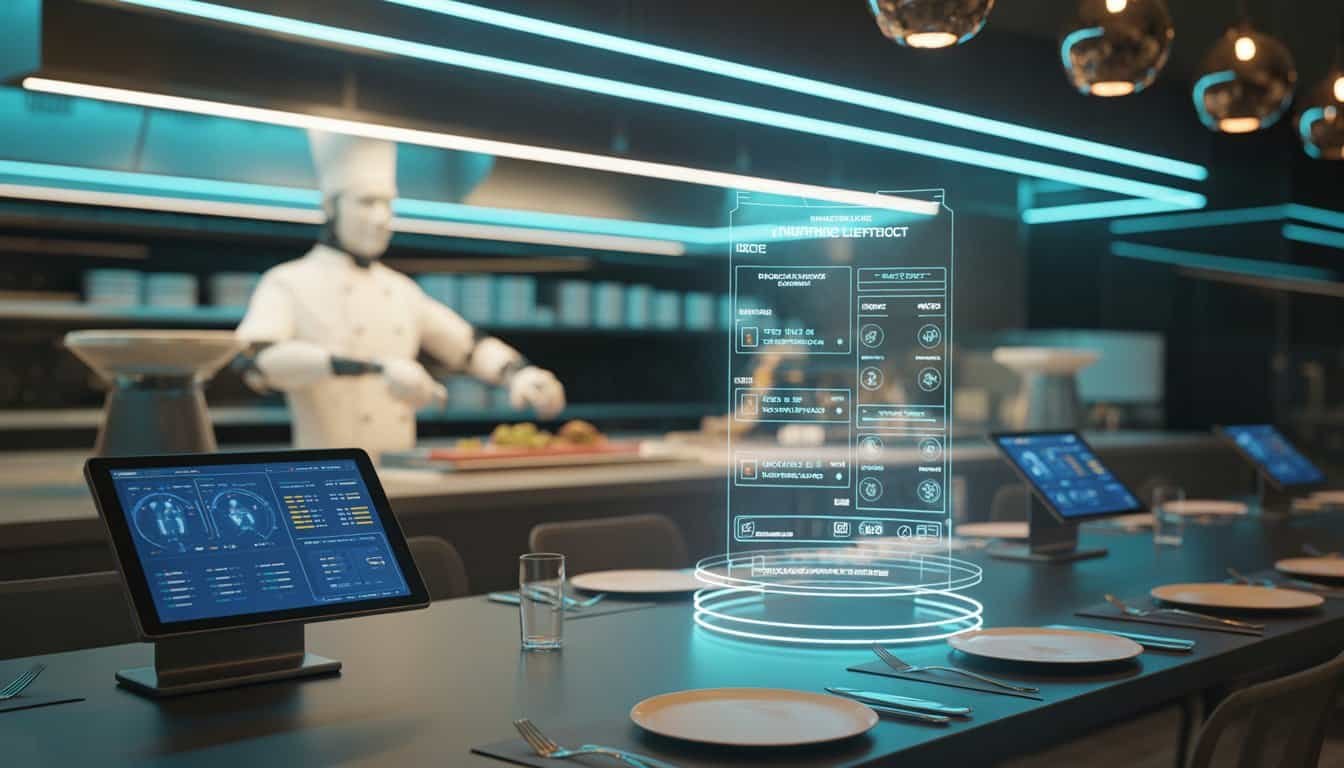
The restaurant industry has always been shaped by innovation, from the introduction of commercial refrigeration to the rise of online ordering. Today, a new transformation is underway, and it may be the most powerful yet: Artificial Intelligence.
AI is no longer a futuristic concept reserved for tech companies. It is actively reshaping how restaurants operate, serve guests, control costs, and grow revenue. For restaurant owners, operators, and even aspiring entrepreneurs, understanding AI is quickly becoming less of an advantage and more of a necessity.
Let’s explore how artificial intelligence is redefining the restaurant industry and what it means for the future.
The Shift Toward Intelligent Operations
Running a restaurant has always required juggling dozens of moving parts: labor, inventory, scheduling, customer service, marketing, and profitability. AI brings something operators have never truly had before, predictive intelligence.
Instead of reacting to problems, restaurants can now anticipate them.
Modern AI tools analyze historical sales data, weather patterns, local events, and consumer behavior to forecast demand with impressive accuracy. Imagine knowing you’ll sell 40% more salads on an unusually warm Tuesday, or that a nearby concert will cause a spike in late-night traffic.
This level of insight helps restaurants:
- Reduce food waste
- Prevent overstaffing or understaffing
- Optimize purchasing
- Protect already thin profit margins
In an industry where the average net margin often sits between 3–8%, smarter forecasting can mean the difference between surviving and thriving.
AI Is Becoming the Ultimate Restaurant Assistant
One of the biggest challenges restaurant owners face is time. There are never enough hours in the day.
AI is quickly stepping in as a powerful operational partner.
Today’s platforms can:
- Automatically generate staff schedules
- Manage reservations
- Respond to customer inquiries
- Suggest menu pricing adjustments
- Track inventory in real time
Some systems even recommend which menu items to promote based on profitability and popularity. Essentially acting as a built-in business consultant.
For independent operators who cannot afford large management teams, AI levels the playing field.
Hyper-Personalized Guest Experiences
The future of dining will not just be faster, it will be more personal.
AI-driven CRM systems can remember guest preferences, dietary restrictions, favorite menu items, and visit frequency. This allows restaurants to create tailored promotions that feel less like marketing and more like hospitality.
Picture this:
A guest who frequently orders gluten-free meals automatically receives a notification when a new gluten-free dessert launches. A couple who dines every anniversary gets a personalized offer before their special date.
These small touches build loyalty and loyalty drives repeat revenue.
Restaurants that embrace personalization will stand out in an increasingly crowded market.
Voice AI and Automated Ordering
We are already seeing AI-powered voice assistants handling drive-thru orders with surprising accuracy. These systems do not get tired, never rush guests, and consistently upsell add-ons like drinks or desserts.
The benefits extend beyond convenience:
- Shorter wait times
- Increased average ticket sizes
- Fewer order mistakes
- Reduced labor pressure
Importantly, AI is not about replacing human hospitality — it is about allowing staff to focus on what truly matters: creating memorable guest experiences.
The restaurants of the future will likely operate with a hybrid workforce where technology handles repetition and humans deliver connection.
Smarter Marketing That Actually Converts
Marketing has traditionally been a guessing game for many restaurants. AI removes much of that uncertainty.
Instead of sending generic promotions, AI tools analyze guest behavior to determine:
- When customers are most likely to visit
- What offers motivate them
- Which channels they respond to
- How often to communicate without overwhelming them
The result? Higher conversion rates and stronger ROI on marketing dollars.
Even better, many AI platforms can generate emails, social media posts, and promotional campaigns in minutes, something that once required hiring agencies or dedicating valuable internal resources.
For busy owners, this is a game changer.
Robotics and the Rise of the Smart Kitchen
While fully robotic kitchens may not become the norm overnight, automation is already making its way into food preparation.
AI-powered equipment can:
- Monitor cooking temperatures
- Ensure consistency
- Reduce human error
- Speed up production
This is particularly valuable for multi-unit operators striving to deliver the same quality across every location.
Consistency builds trust and trust builds brands.
Cost Control in an Era of Rising Expenses
Food costs fluctuate. Labor costs continue to climb. Rent rarely goes down.
AI provides operators with clearer financial visibility.
Advanced analytics platforms can identify:
- Which menu items quietly drain profits
- Where portion sizes creep upward
- When suppliers raise prices
- How small inefficiencies compound over time
Instead of discovering issues at the end of the month, owners can make adjustments in real time.
Financial clarity is no longer reserved for large chains. AI is democratizing it.
Will AI Replace Restaurant Jobs?
This question surfaces often and understandably so.
The reality is more nuanced.
AI will replace certain repetitive tasks. But it will also create new roles centered around technology management, guest engagement, and data driven decision making.
Restaurants have always been human at their core. People go out to eat for connection, celebration, comfort, and experience.
No algorithm can replicate genuine hospitality.
The winners in this new era will not be the restaurants that choose between technology and people but those that learn to blend both seamlessly.

What This Means for Restaurant Owners
The message is clear: AI is not coming someday. It is already here.
Owners who begin exploring AI now position themselves ahead of the curve, while those who delay risk falling behind competitors who operate leaner, market smarter, and adapt faster.
You do not need to overhaul your restaurant overnight. Start small.
Consider adopting AI tools for:
- Inventory forecasting
- Automated marketing
- Labor scheduling
- Customer insights
- Menu optimization
Incremental improvements compound quickly.
The Competitive Advantage Window Is Still Open
Here is the encouraging news: we are still in the early stages of AI adoption within the restaurant industry.
That means there is a window of opportunity.
Early adopters are not just improving efficiency they are redefining guest expectations. And once expectations shift, the entire industry follows.
The restaurants that thrive over the next decade will likely share one common trait: intelligent operations powered by data.
Final Thoughts: Technology Will Not Replace Great Restaurants — It Will Empower Them
Artificial intelligence is not a threat to the restaurant industry. It is a powerful tool that, when used wisely, allows operators to focus more on creativity, hospitality, and growth.
Think of AI as the silent partner that never sleeps — constantly analyzing, optimizing, and uncovering opportunities.
For an industry known for razor-thin margins and high stress, that kind of support is invaluable.
The future restaurant will still be filled with laughter, conversation, and the aroma of incredible food. The difference is that behind the scenes, smarter systems will help make it all run effortlessly.
And for owners willing to embrace the shift, the future looks not just automated but extraordinarily bright.